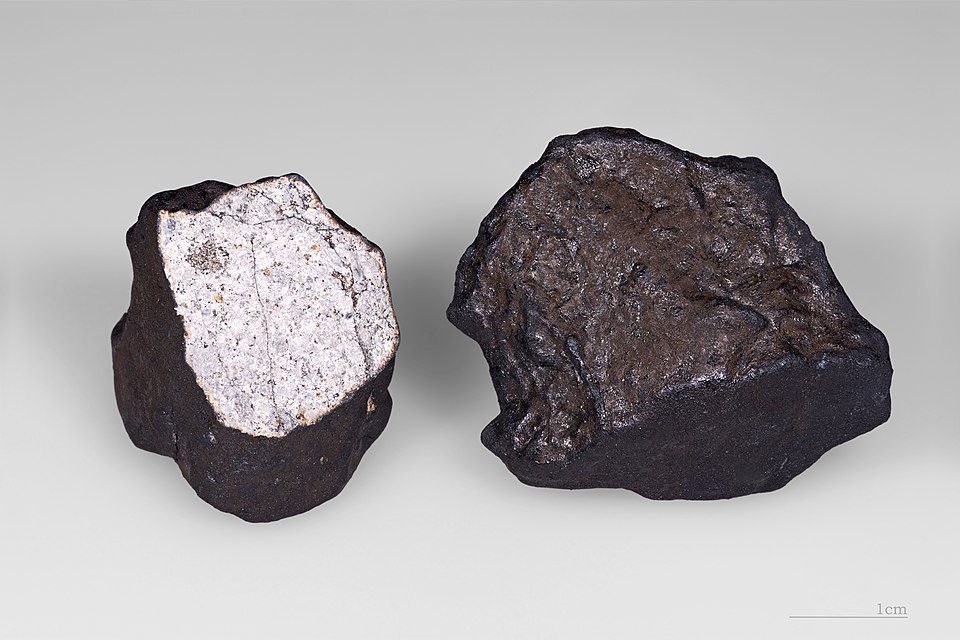
Chelyabinsk
Chelyabinsk
Silicati + Fe-Ni Properties
- Category
- Meteorite
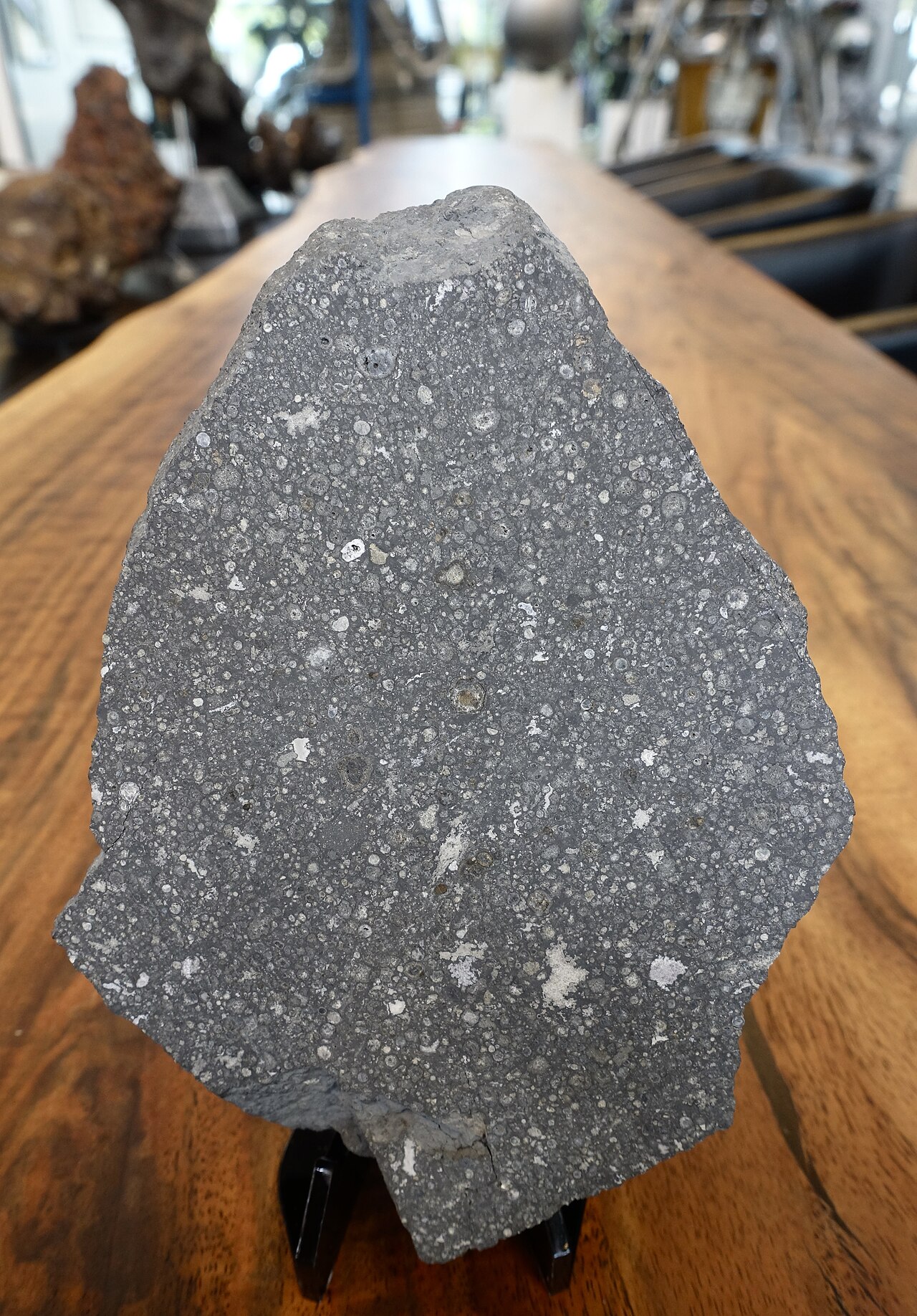
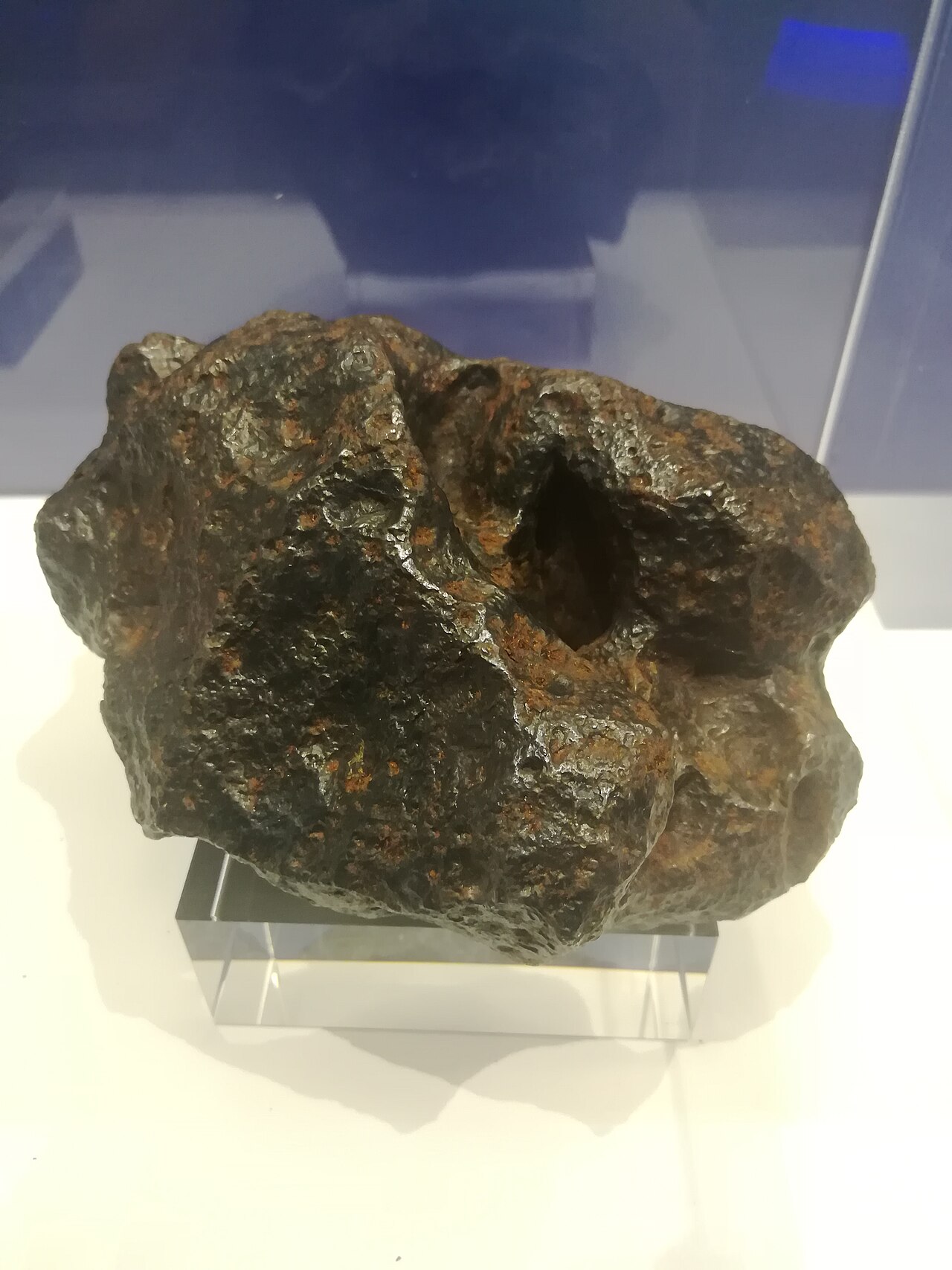
The Chelyabinsk meteorite is an ordinary chondrite of type H5 that fell on February 15, 2013, in the Urals region of Russia, one of the most energetic documented impacts in modern times with an estimated energy release of 440 kilotons.
The Chelyabinsk meteorite represents one of the most significant astronomical events of the twenty-first century. At 3:20 UTC on February 15, 2013, a celestial body approximately 20 meters in diameter penetrated Earth's atmosphere above the southern Urals region at a velocity of approximately 19.16 kilometers per second. The aerial explosion generated by its atmospheric impact, which occurred at approximately 23 kilometers altitude, released energy equivalent to 440 kilotons of TNT, roughly 30 times greater than the Hiroshima bomb. The resulting shock wave caused widespread structural damage, injuring over 1,500 people in the city of Chelyabinsk and surrounding areas.
From a mineralogical perspective, the meteorite belongs to the class of ordinary chondrites, subtype H5, characterized by silicate chondrules embedded in a fine matrix rich in iron and nickel. The composition includes olivine (Mg,Fe)₂SiO₄, orthopyroxene (Mg,Fe)SiO₃, plagioclase feldspar, and iron-nickel metallic phases (kamacite and taenite). The thermal metamorphism grade of 5 indicates that the material underwent significant heating in the parent asteroid body prior to fragmentation and fall. The recovered fragments, some weighing several kilograms, provided researchers with a unique opportunity to study the primordial composition of the inner Solar System and the processes of planetary differentiation.
Classification: Ordinary chondrite H5, with thermal metamorphism grade 5 and aqueous alteration grade W0-W1. Primary mineralogical composition: olivine (Fa₁₈₋₂₀), orthopyroxene (Fs₁₆₋₁₈Wo₁₋₂), plagioclase (An₁₂₋₁₅), Fe-Ni metallic phases (kamacite and taenite in approximately 90:10 proportion). Bulk density: 3.3-3.5 g/cm³. Mohs hardness: 5-6 (variable depending on mineralogical phase). Magnetic properties: ferromagnetic due to metallic iron content. Fracture index: irregular; metals display conchoidal fracture. Oxygen isotopic analysis (δ¹⁸O and δ¹⁷O) places the material on the ordinary fractionation line (OC). Radiometric age: approximately 4,560 million years (age of the primitive Solar System), with cosmic ray exposure age estimated at 5-10 million years prior to impact. Raman spectroscopy shows characteristic peaks of olivine, pyroxene, and magnetite. Scanning electron microscopy (SEM-EDS) reveals elemental compositions consistent with H5 type and absence of significant alteration from terrestrial processes.
Mining localities
- Chelyabinsk, Oblast di Chelyabinsk, Russia
- Regione degli Urali meridionali, Russia
Frequently Asked Questions
How much is a Chelyabinsk meteorite fragment worth and where can I buy it?
Authentic Chelyabinsk fragments range from 0.50 to 5 euros per gram depending on quality and certification, with higher prices for intact pieces. They are available through specialized dealers, scientific auction houses, and mineralogical museums, always requesting authenticity certificates and provenance documentation.
How can I identify a real Chelyabinsk meteorite from a fake?
Chelyabinsk meteorites are ordinary H5 chondrites characterized by a glossy black fusion crust, visible granular internal structure when cut, and magnetic metallic inclusions (Fe-Ni). A magnet test immediately reveals the iron component, while microscopic analysis confirms the chondrules typical of ordinary chondrites.
What are the mineralogical properties and chemical composition of the Chelyabinsk meteorite?
The Chelyabinsk meteorite is composed mainly of silicates (olivine and pyroxene), metallic iron-nickel, and traces of troilite, with a density of approximately 3.3-3.4 g/cm³ consistent with H5 ordinary chondrites. Its mineralogical formula includes (Mg,Fe)₂SiO₄ for olivine and (Mg,Fe)SiO₃ for pyroxene, plus Fe-Ni alloys.
How was the Chelyabinsk meteorite formed and where did it come from?
The Chelyabinsk meteorite formed approximately 4.5 billion years ago in the asteroid belt between Mars and Jupiter, where primordial material aggregated into ordinary chondrites. An asteroidal impact ejected it from its original orbit, causing it to collide with Earth's atmosphere on February 15, 2013, generating a force of 440 kilotons.
Entry generated with Claude API (Anthropic) on data extracted from Mindat, RRUFF and Wikipedia. Not yet reviewed by a human expert. Verify data against original sources before citing in formal work.