Chrysoprase
Crisoprasio
SiO₂ Properties
- Category
- Gem
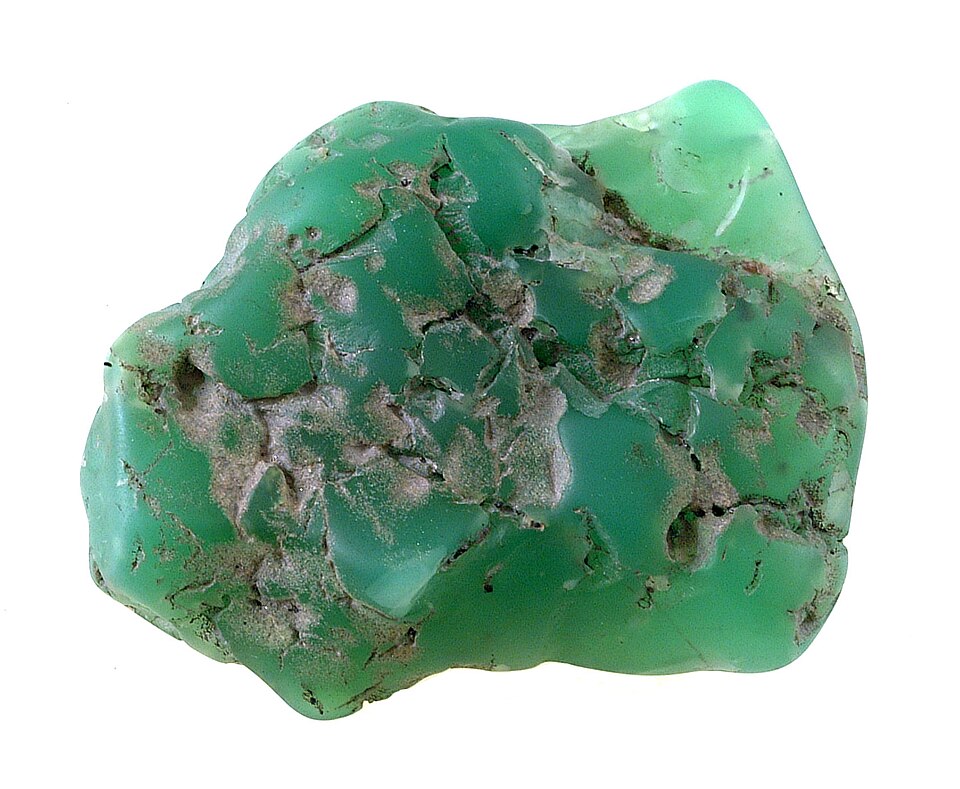
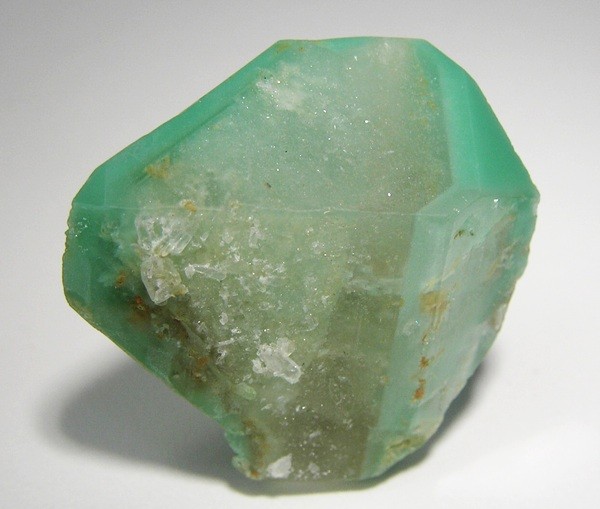
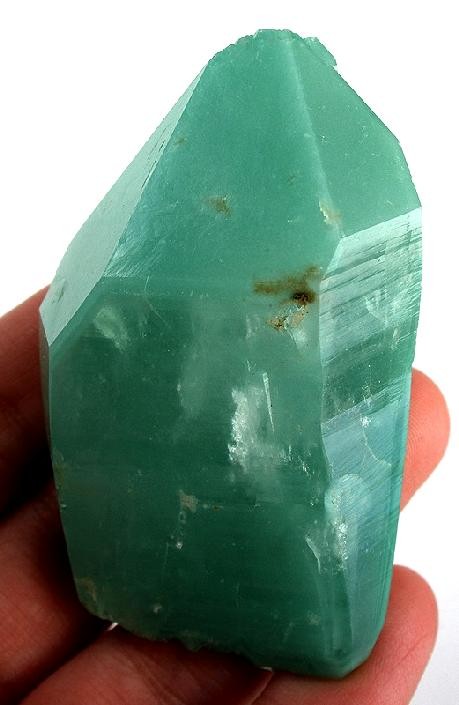
Chrysoprase is a variety of chalcedony (microcrystalline quartz) characterized by an intense apple-green color due to nickel traces, appreciated as a gemstone for over two thousand years and today among the most sought-after green stones in the international gemmological market.
Chrysoprase is a cryptocrystalline variety of SiO₂ that belongs to the chalcedony family. Its characteristic green color, ranging from apple-green to sage-green, is determined by the presence of interstitial nickel oxides in the crystal structure. Unlike chrysocolla (a hydrated copper silicate), chrysoprase is harder and more stable, making it ideal for jewelry. Its formation typically occurs in supergene environments, where nickel-rich solutions alter silicate rocks in oxidation zones of lateritic nickel deposits.
Historically, chrysoprase was highly valued by ancient Greeks and Romans, who used it for cameos and seals. During the Middle Ages, it remained a prestigious gemstone in European courts. The world's principal deposits are found in Western Australia (Wingelina and Greenbushes), where quality is exceptional, followed by deposits in Tanzania, Brazil, and Kazakhstan. In the contemporary gemmological market, specimens with intense and saturated color, free from visible inclusions, command significant prices, especially if certified by independent laboratories. The stone is sensitive to heat and intense light, which can fade its color over time.
Chrysoprase crystallizes in the trigonal system with hardness 6.5–7 Mohs and density 2.58–2.64 g/cm³. The refractive index ranges from 1.530 to 1.540 (ordinary) and 1.539–1.549 (extraordinary), with birefringence of approximately 0.009. UV fluorescence is generally absent or very weak. The visible absorption spectrum shows characteristic bands in the blue-green region (around 430 nm) due to Ni²⁺ ions. The chemical composition is essentially SiO₂ with nickel concentrations varying from 0.1 to 1.0% by weight; traces of iron, chromium, and manganese can influence the hue. Analysis via Raman spectroscopy confirms the microcrystalline quartz structure, while infrared spectroscopy reveals characteristic bands of interstitial OH. Scanning electron microscopy reveals a granular texture with crystallite dimensions below 1 micrometer. Chrysoprase is thermally unstable; heating above 100 °C can cause moisture loss and color fading. Gemmological determination is based on the combination of hardness, density, refractive indices, and spectroscopic characteristics; thermal treatments and dyes can significantly alter optical properties and must be disclosed according to CIBJO standards.
Mining localities
- Wingelina, Australia Occidentale, Australia
- Greenbushes, Australia Occidentale, Australia
- Merelani Hills, Arusha, Tanzania
- Minas Gerais, Brasile
- Kazakistan
- Szklary, Dolnośląskie, Polonia
Frequently Asked Questions
What is the difference between chrysoprase and jade?
Chrysoprase is a variety of chalcedony (SiO₂) microcrystalline with a hardness of 6.5-7 on the Mohs scale, whereas jade comprises two distinct minerals: jadeite and nephrite, both harder at 7-7.5. Chrysoprase displays an apple-green translucent color due to nickel traces, while jade tends toward deeper, more opaque tones, making them easily distinguishable to the naked eye.
Where is the best quality chrysoprase found in the world?
The main deposits of gem-quality chrysoprase are located in Australia (Queensland), which represents the world's most important source, followed by Brazil and Tanzania. Australia produces over 90% of commercially excellent chrysoprase, with specimens characterized by intense apple-green color and good transparency.
How to recognize authentic chrysoprase from imitations and treatments?
Authentic chrysoprase has a hardness of 6.5-7 and does not scratch easily with a coin; additionally, the green color should appear natural without anomalous variations under ultraviolet light. Be wary of overly vivid or uniform stones: these are often artificially dyed chalcedony; natural chrysoprase may show subtle tonal variations and sometimes contains mineral inclusions, which are features of authenticity.
What is the price of chrysoprase per carat and what factors influence it?
Gem-quality chrysoprase is generally valued between 5 and 50 euros per carat, with significant variations based on color, transparency, and origin. The main factors are the intensity of the apple-green hue (more saturated is more expensive), transparency (translucent chrysoprase is preferred), size, and authenticity certification; high-quality Australian specimens command the highest prices.
Entry generated with Claude API (Anthropic) on data extracted from Mindat, RRUFF and Wikipedia. Not yet reviewed by a human expert. Verify data against original sources before citing in formal work.