Diamond
Diamante
C Properties
- Category
- Gem
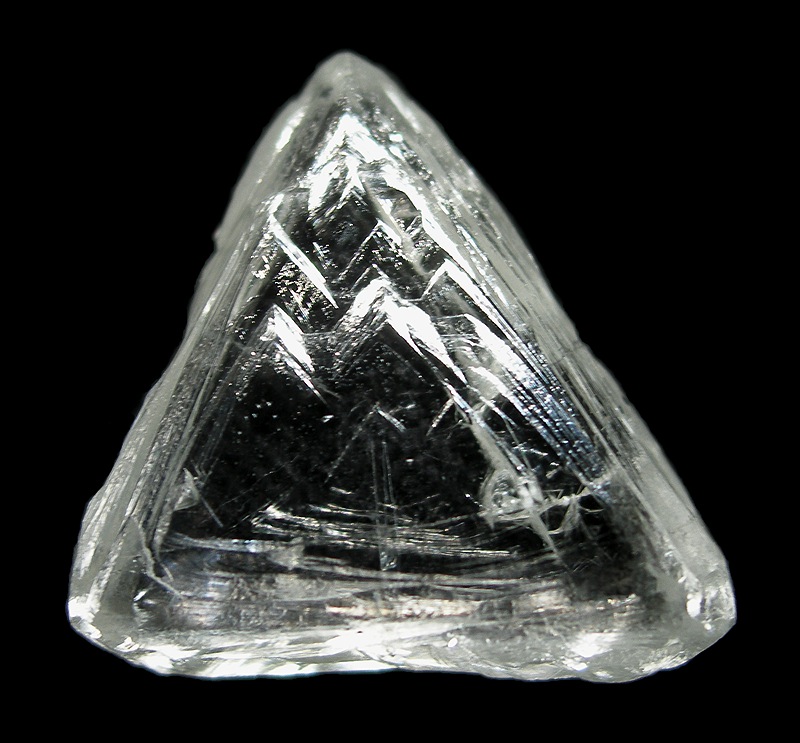
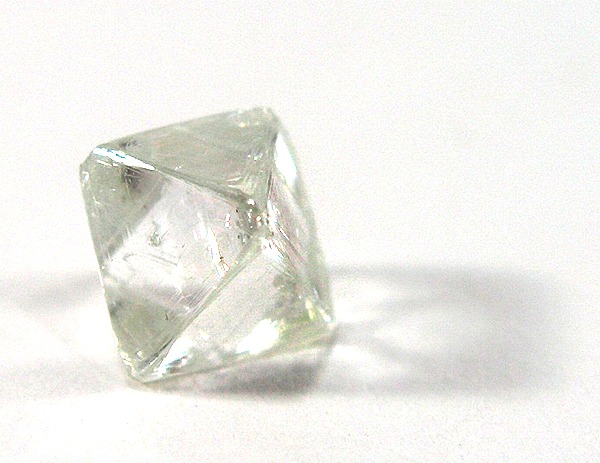
Diamond is the hardest mineral in absolute terms (10 on the Mohs scale), composed of pure carbon crystallized in the cubic system, and represents the most precious form of carbon thanks to its transparency, brilliance, and geological rarity.
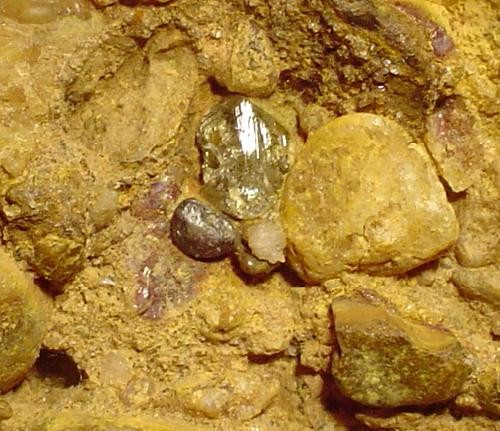
Diamond (C) is the allotropic form of carbon that is thermodynamically stable at high pressures and temperatures, characterized by a cubic crystal structure in which each carbon atom is tetrahedrally bonded to four other carbon atoms, creating an extremely rigid three-dimensional network. This atomic architecture confers upon diamond maximum hardness (10 Mohs) and exceptional chemical stability. From a gemological perspective, diamond is evaluated according to the "4 Cs" (carat weight, color, clarity, cut), with the finest specimens sourced from primary deposits in ultramafic rocks (kimberlites and lamproites) of southern Africa (Botswana, South Africa, Namibia), Russia, and more recently Australia and Canada. Formation requires extreme conditions: pressures exceeding 4.5 GPa and temperatures between 900 and 1300 °C, typically at depths greater than 140 km in the Earth's mantle. Diamonds are brought to the surface by explosive volcanic eruptions that create characteristic kimberlitic diatremes. Beyond natural diamond, since the 1950s synthetic diamonds have been produced via high-pressure high-temperature (HPHT) methods, and more recently laboratory-grown diamonds have been manufactured by chemical vapor deposition (CVD), which have revolutionized the gemological and industrial markets.
Crystal system: cubic (space group Fd-3m, Z=8). Lattice parameter: a = 3.567 Å. Density: 3.52 g/cm³ (natural Type Ia diamond). Hardness: 10 Mohs; Knoop indentation ranges from 7000 to 10000 kg/mm² depending on crystallographic orientation. Refractive index: n ≈ 2.417 (monochromatic, 589 nm); dispersion (ω – ε) ≈ 0.044 (high, responsible for "fire"). Birefringence: absent (isotropic). UV-Vis spectroscopy: characteristic absorption in the near-UV; variable fluorescence (blue, yellow, orange) as a function of defects and impurities (N, B, H). Raman spectroscopy: characteristic peak at 1332 cm⁻¹ (C-C vibration). Thermal conductivity: ~2000 W/m·K (maximum among gemstones). Classification by impurity content (DOND - Diamond Optical Nomenclature Database): Type Ia (dispersed N, colorless-yellow), Type Ib (single substitutional N, intense yellow), Type IIa (N absent, colorless), Type IIb (B present, blue). Characteristic inclusions: olivine, garnet, pyrope, eclogite; "feathers" (internal fractures); "clouds" (micro-inclusion aggregates). Instrumental gemological analysis: UV-Vis spectrophotometry, confocal microscopy, Raman tomography, X-ray fluorescence (XRF) to discriminate CVD and HPHT synthetic diamonds from natural stones. Treatments: irradiation, heating, surface coating.
Mining localities
- Botswana — Orapa, Jwaneng (depositi primari kimberlitici; 25% della produzione mondiale)
- Sud Africa — Kimberley, Cullinan, Premier (storici giacimenti; diamanti Type Ia prevalenti)
- Russia — Yakutia, Mirny (diamanti Type IIa di eccellente qualità)
- Namibia — Oranjemund (diamanti alluvionali di alta qualità)
- Australia — Argyle (chiusa 2020; produceva 90% dei diamanti fancy colored)
- Canada — Diavik, Ekati (diamanti naturali certificati, basso impatto ambientale)
- Angola — Lunda Norte (risorse primarie significative)
- Zimbabwe — Marange (diamanti alluvionali, qualità variabile)
Frequently Asked Questions
How does diamond form in nature and how long does it take?
Diamond forms in Earth's mantle at depths exceeding 150 km, where extremely high temperatures (900-1300°C) and pressures transform pure carbon (C) into cubic crystal structure. This process takes billions of years, and diamonds reach the surface only through explosive volcanic eruptions that create kimberlite pipes.
What is the difference between natural and synthetic diamond from a scientific perspective?
Chemically they are identical (both pure carbon in cubic structure), but synthetic diamond is created in laboratories in a few weeks using controlled high temperatures and pressures. Natural diamonds contain trace elements and inclusions that attest their geological origin, while synthetic ones have nearly perfect purity.
How can you tell a real diamond from a fake?
A real diamond has a hardness of 10 on the Mohs scale and can scratch any other mineral without damage, while imitations like cubic zirconia or glass are much softer. Additionally, authentic diamond has superior thermal conductivity (approximately 5 times greater than silver) and shows characteristic chromatic dispersion of light.
Where are diamonds found in the world and what are the main producing countries?
The largest diamond deposits are found in Botswana, Russia (Siberia), South Africa, Angola, and Canada, where kimberlitic eruptions brought the mineral to the surface. Botswana is currently the world's leading producer by quality and quantity, followed by Russia, and these countries supply over 70% of global commercial diamonds.
Entry generated with Claude API (Anthropic) on data extracted from Mindat, RRUFF and Wikipedia. Not yet reviewed by a human expert. Verify data against original sources before citing in formal work.