Selenite
Selenite
CaSO₄·2H₂O Properties
- Category
- Mineral
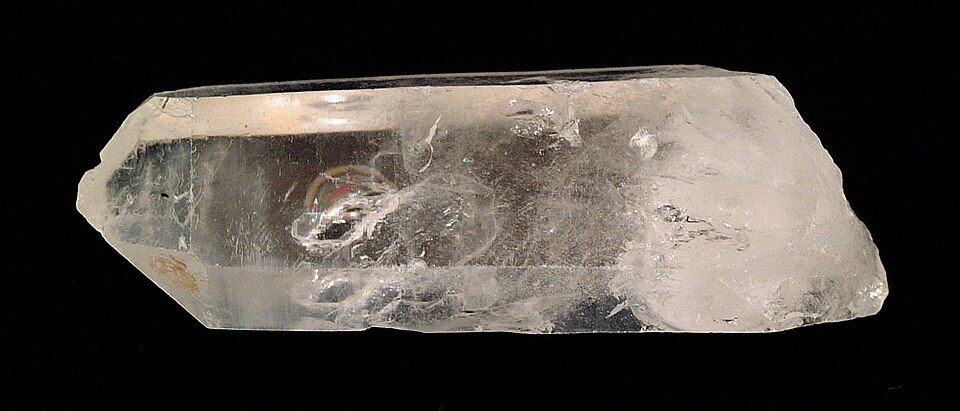
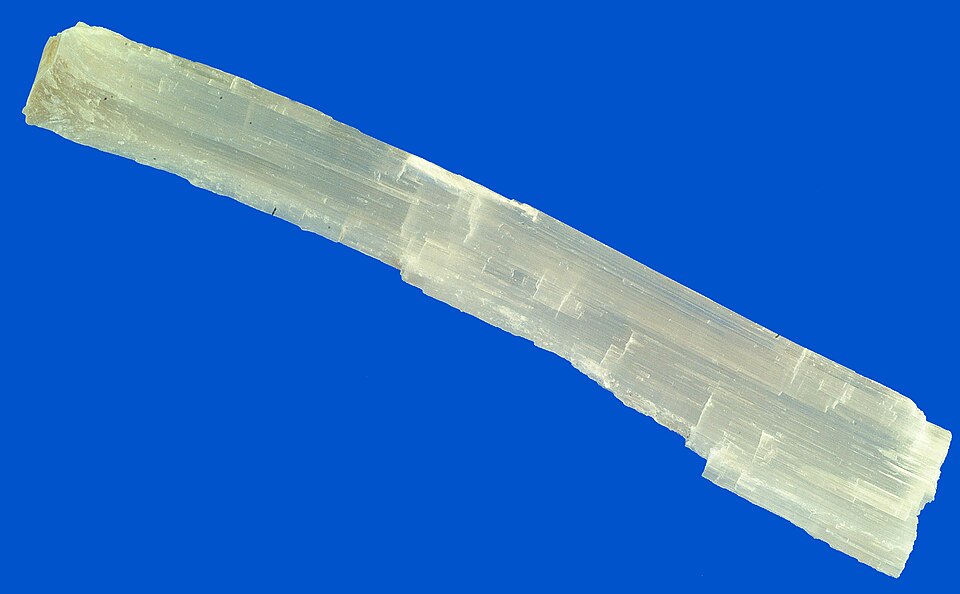
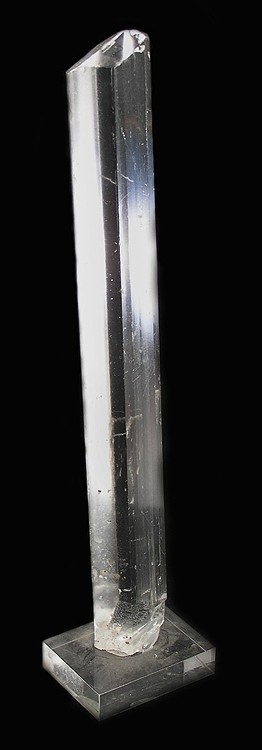
Selenite is a mineral of hydrated calcium sulfate (CaSO₄·2H₂O) that forms transparent and colorless crystals, extraordinarily fragile and easy to cleave. It takes its name from the Greek *selene* (moon) for its characteristic lunar brilliance, and represents the purest crystalline variety of gypsum.
Selenite is the most transparent and pure crystalline variety of gypsum, an evaporitic mineral that forms from the evaporation of saline waters in lagoon, lacustrine, or marine environments. It crystallizes in the monoclinic system with extremely low hardness (2 on the Mohs scale), making it easily scratched even by fingernail. Its most distinctive characteristic is *perfect cleavage* along the (010) plane, which produces transparent and flexible laminae—a phenomenon that has fascinated mineralogists and collectors for centuries. The name derives from ancient Greek *selene* (moon), referring to its pearly and translucent luster reminiscent of moonlight. Important deposits are found in Mexico (Naica, with giant crystals up to 11 meters), Italy (Tuscany, Sicily), Morocco, and the United States. Selenite was historically used as a material for transparent windows in medieval and early modern times, before the advent of glass.
Selenite is the transparent monoclinic variety of CaSO₄·2H₂O, belonging to the sulfate group. Crystal system: monoclinic, space group C2/c. Lattice parameters: a = 6.29 Å, b = 15.20 Å, c = 6.03 Å, β = 113.8°. Mohs hardness: 2 (easily scratched). Density: 2.32 g/cm³. Refractive index: nα = 1.520, nβ = 1.523, nγ = 1.530 (birefringence δ = 0.010, biaxial positive). Perfect cleavage along (010), producing transparent and flexible laminae. Luster: pearly to vitreous. Color: colorless, sometimes with yellow, gray, or pink tones due to inclusions of iron oxides or organic matter. Pleochroism absent or very weak. Solubility in hot water. UV fluorescence: occasionally weakly blue under long-wave UV rays. Common mineral associations: halite, sylvite, epsomite, anhydrite. Formation: evaporitic environments in marine or lacustrine basins, often in stratigraphic sequences alternating with halite and other sulfates. The giant variety at Naica (Mexico) formed under hydrothermal conditions at temperatures of 54–58 °C in karstic cavities.
Mining localities
- Naica, Chihuahua, Messico — giacimento di cristalli giganti (fino a 11 m)
- Volterra, Toscana, Italia — depositi evaporitici mioceni
- Agrigento, Sicilia, Italia — sequenze gessose associate a salgemma
- Marocco — depositi evaporitici dell'Atlante
- Oklahoma e Texas, Stati Uniti — bacini evaporitici paleozoici
- Spagna (Soria, Castilla y León) — giacimenti gessosi continentali
Frequently Asked Questions
What is selenite and how does it form?
Selenite is a hydrated calcium sulfate mineral (CaSO₄·2H₂O) that forms from the evaporation of salt waters in desert environments or ancient sedimentary deposits. Its transparent, colorless crystals develop slowly under low temperature and humidity conditions, creating extremely fragile structures that easily split along cleavage planes.
How can you identify selenite and distinguish it from other minerals?
Selenite is recognized by its characteristic moonlike luster, perfect transparency, and extreme fragility of crystals that easily split under minimal pressure. A distinctive feature is its cleavage along three perpendicular directions, producing thin and flexible laminae; additionally, it has very low hardness (2 on the Mohs scale), lower than gypsum.
Where is selenite found and what is its price?
Selenite is mainly found in evaporitic deposits in the United States (Oklahoma, Kansas), Mexico, Egypt, and various arid European zones. Prices vary considerably based on quality and size: small samples for collections cost €5-20, while large well-formed crystals can reach €50-200 or more depending on rarity and origin.
Why is selenite so fragile and how should it be preserved?
Selenite is extremely fragile because its crystal structure is characterized by weak bonds between parallel atomic planes and very low hardness (2 on the Mohs scale). To preserve it correctly, keep it in dry environments away from humidity and temperature fluctuations, stored in separate boxes with soft paper to prevent friction and pressure damage.
Entry generated with Claude API (Anthropic) on data extracted from Mindat, RRUFF and Wikipedia. Not yet reviewed by a human expert. Verify data against original sources before citing in formal work.