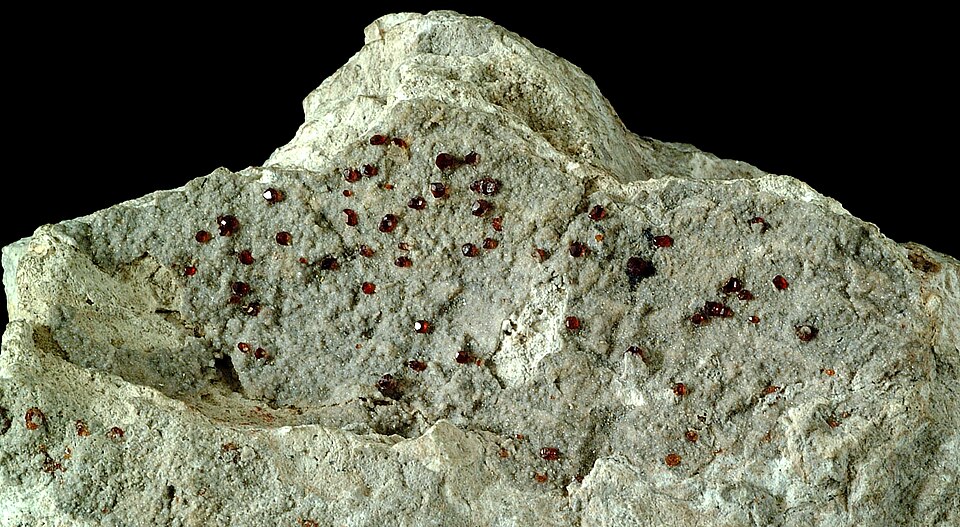
Spessartite Garnet
Granato Spessartite
Mn₃Al₂(SiO₄)₃ Properties
- Category
- Gem
Spessartite is a manganese garnet with intense orange-red coloration, among the rarest and most prized members of the garnet family. It crystallizes in the cubic system and reaches a hardness of 7-7.5 Mohs, making it suitable for fine jewelry applications.
Spessartite (Mn₃Al₂(SiO₄)₃) is the manganese-rich end member of the pyroxene garnet series, first discovered in the Spessart region (Bavaria) in the nineteenth century. Its characteristic color ranges from vivid orange to reddish-brown, determined by manganese concentration and traces of iron and chromium. Unlike many garnets, spessartite frequently exhibits *fluorescence* under ultraviolet light, with orange-red emission particularly pronounced in specimens from Madagascar and Namibia. The gem is highly valued by collectors for its crystalline transparency and moderate gemological fire; however, its relative brittleness along cleavage directions requires extreme care during cutting. The most significant deposits occur in Madagascar (Lovasoa and Antananarivo), Namibia (Erongo), Brazil (Minas Gerais), and Japan (Nagano Prefecture), with gem-quality specimens commanding prices comparable to mid-range rubies in the international market.
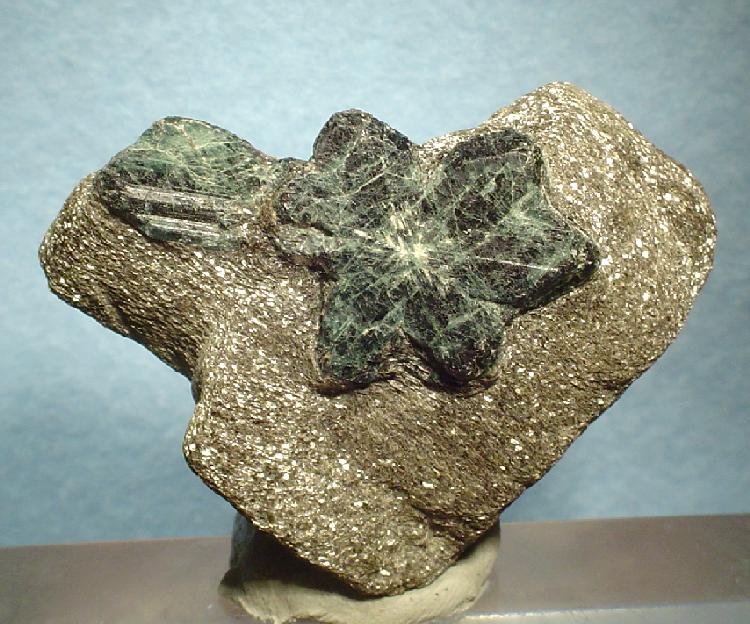
Crystal system: cubic (space group Ia3d); lattice parameter a = 11.62 Å. Density: 4.12–4.20 g/cm³ (calculated from ideal composition). Refractive index: nω = 1.795–1.810 (isotropic, birefringence absent). Mohs hardness: 7.0–7.5; conchoidal fracture, cleavage absent (characteristic of cubic garnets). Spectroscopy: characteristic visible absorption with intense band around 460 nm (blue) due to d-d transitions of Mn²⁺; red-orange fluorescence under UV-A (365 nm) and UV-C (254 nm). Ideal chemical composition Mn₃Al₂(SiO₄)₃ with frequent isomorphic substitutions: Fe²⁺ substituting for Mn (series toward almandine), Ca²⁺ substituting for Mn (series toward grossular). Raman spectroscopy analysis shows characteristic peaks at 905 cm⁻¹ (Si-O stretching), 552 cm⁻¹ and 470 cm⁻¹ (Si-O-Si bending). Common inclusions: magnetite, ilmenite, zircon; rare asterism phenomena in sections cut perpendicular to the [111] axis. Geological genesis: in pegmatitic granites, metasomatic gneisses, and less frequently in high-grade metamorphites associated with alkali feldspars and quartz. Thermal stability: stable up to ~1200 °C; inert to common organic solvents.
Mining localities
- Madagascar — Lovasoa e Antananarivo (esemplari di qualità superiore, fluorescenza intensa)
- Namibia — Erongo, Kunene (spessartite vivace arancio, depositi significativi)
- Brasile — Minas Gerais, Conselheiro Pena (granati da pegmatiti)
- Giappone — Prefettura di Nagano (cristalli ben formati, qualità gemmologica)
- Mozambico — Niassa (scoperte recenti di spessartite di qualità)
- Myanmar — Mogok (associata a rubini, qualità variabile)
- Kenya — Tsavo (spessartite da metamorfiti)
- Germania — Spessart, Baviera (località tipo, interesse storico)
Frequently Asked Questions
What is the difference between spessartite and other red garnets like almandine?
Spessartite is distinguished by its vivid orange-red color and its manganese-based chemical composition (Mn₃Al₂(SiO₄)₃), while almandine contains iron and displays deeper dark red tones. Spessartite is also significantly rarer and more valuable in the international gemstone market.
Where is spessartite found in the world and what are the main deposits?
The most important spessartite deposits of gemstone quality are located in Myanmar (Burma), Madagascar, Nigeria, and Brazil, with exceptional specimens also coming from Sri Lanka. Myanmar spessartites are historically the most valued for their purity and saturation of orange color.
How much does spessartite cost and what factors influence the price?
Spessartite prices range from €50 to over €3,000 per carat, depending on color intensity, transparency, size, and origin. Specimens with saturated orange-red color, free from visible inclusions, and from renowned deposits (Myanmar primarily) command the highest prices.
How does spessartite form and in what geological environments does it develop?
Spessartite forms in manganese-rich metamorphic rocks, granitic pegmatites, and skarns, crystallizing in the cubic system at moderate temperatures and pressures during regional metamorphic processes. The presence of high manganese and the correct combination of chemical elements are essential for its genesis, making gem-quality spessartite particularly rare.
Entry generated with Claude API (Anthropic) on data extracted from Mindat, RRUFF and Wikipedia. Not yet reviewed by a human expert. Verify data against original sources before citing in formal work.