Barite
Barite
BaSO₄ Properties
- Category
- Mineral
Barite is a barium sulfate (BaSO₄) that crystallizes in tabular or prismatic forms, characterized by an extraordinarily high density and moderate hardness of 3–3.5 on the Mohs scale. It is one of the densest minerals among those commonly found in nature, with industrial applications ranging from the petroleum sector to pigments.
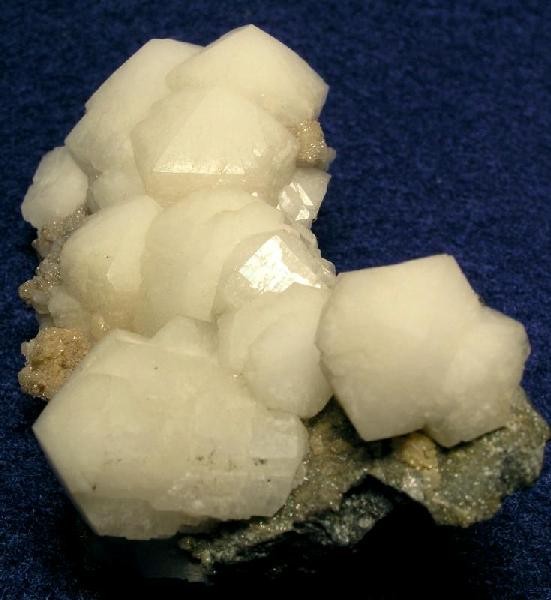
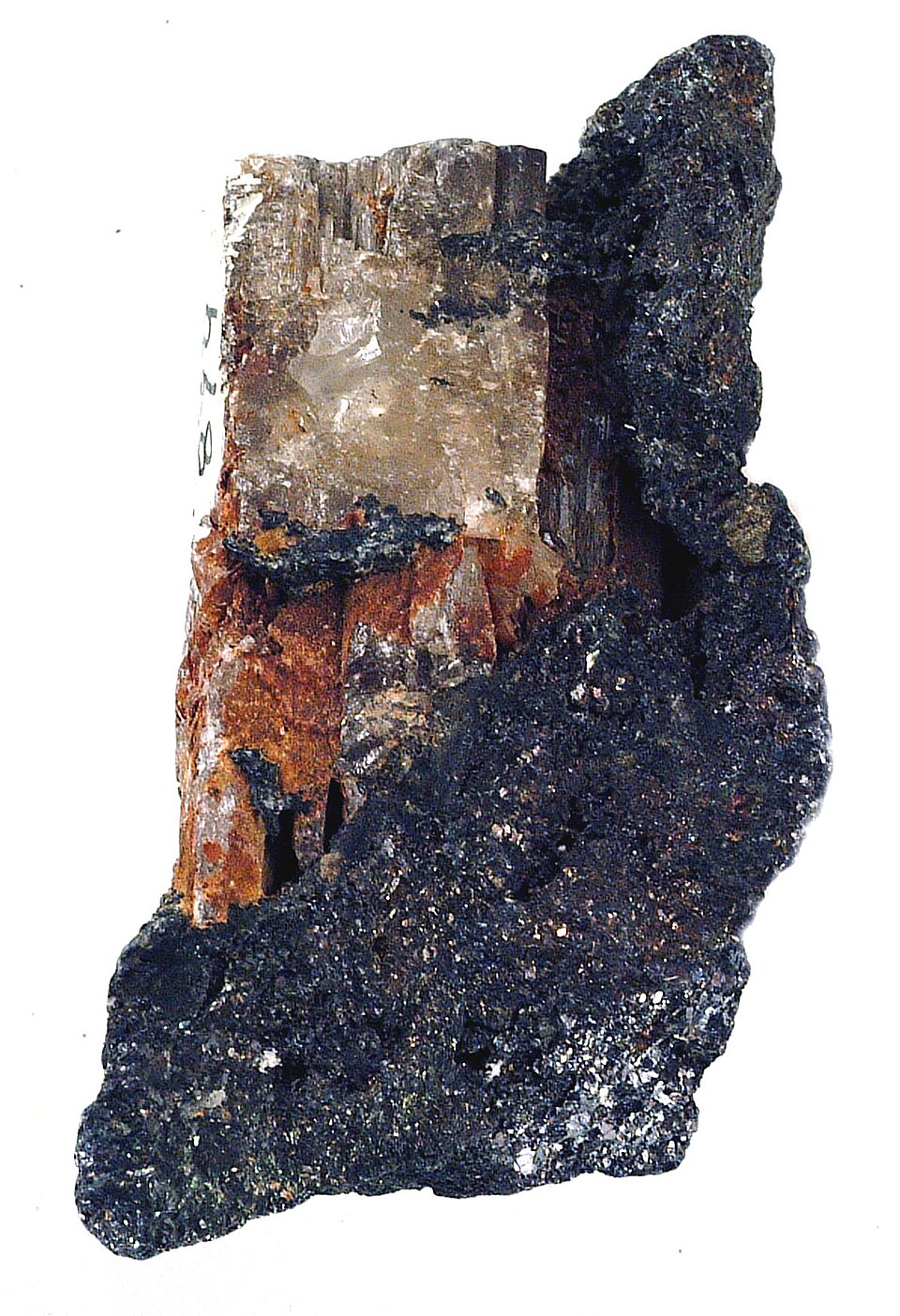
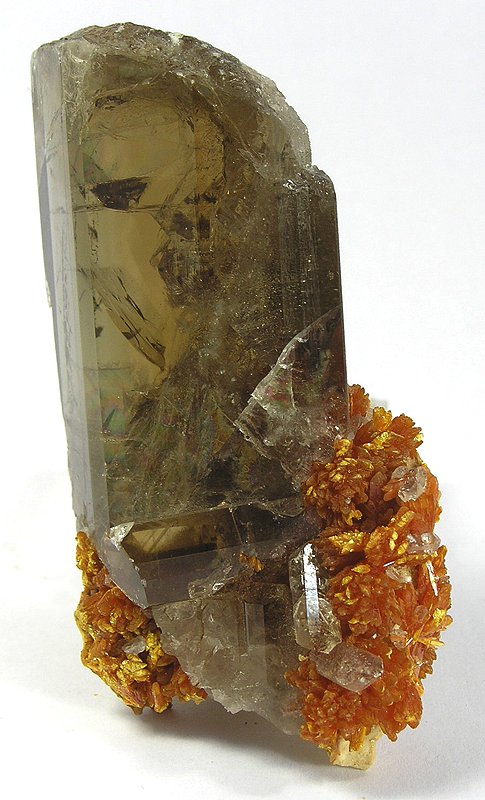
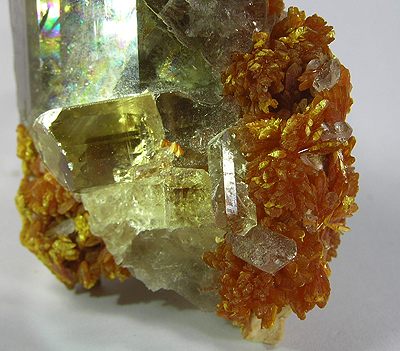
Barite, from the Greek barýs (heavy), is an orthorhombic sulfate that represents one of the principal barium minerals in nature. It crystallizes in the orthorhombic system with tabular or prismatic habit, often forming beautiful colorless, white, or slightly colored crystals (yellow, blue, red). Its exceptional density (4.48–4.50 g/cm³) makes it easily recognizable to the touch. It forms predominantly in low-temperature hydrothermal environments, in association with fluorite, calcite, and galena, or as a chemical precipitate in evaporitic deposits. From an economic perspective, barite is a strategic mineral: 90% of global production is used as a filler in drilling mud for petroleum and geothermal wells, where its density allows pressure control in boreholes. Other applications include the production of barium dioxide, white pigments (barite white) for paints and paper, and radiological shielding.
Crystallographic data: Orthorhombic system, space group Pnma, lattice parameters a = 8.88 Å, b = 5.45 Å, c = 7.15 Å. Physical properties: Hardness 3–3.5 Mohs; density 4.48–4.50 g/cm³; perfect cleavage along (01); conchoidal fracture; vitreous-pearly luster; transparency from transparent to translucent. Refractive indices: nα = 1.636, nβ = 1.637, nγ = 1.648; birefringence 0.012 (weak). Spectroscopy: Characteristic IR absorption of SO₄²⁻ vibrations at 1200–600 cm⁻¹; Raman peaks at 988 cm⁻¹ (symmetric stretching). Thermal analysis: Stable up to ~1600 °C; decomposition begins at higher temperatures with BaO formation. Inclusions and varieties: Celestian barite (with Sr substitution), plumbic barite (with Pb), ferrous barite (with Fe). Mineralogical associations: Fluorite, calcite, galena, sphalerite, pyrite, celestine, quartz. Genesis: Low-temperature hydrothermal, evaporitic, diagenetic in marine environments.
Mining localities
- Cumbria, Inghilterra (cristalli eccezionali)
- Sardegna, Italia (depositi idrotermali)
- Dolomiti, Italia (associazioni con fluorite)
- Derbyshire, Inghilterra (baryte rose)
- Marocco (cristalli blu e rosa)
- Cina (principale produttore mondiale)
- Stati Uniti – Nevada, California (depositi industriali)
- Messico (cristalli di qualità gemmologica)
Frequently Asked Questions
Why is barite so heavy and dense?
Barite (BaSO₄) is extraordinarily dense because it contains barium, an element with very high atomic weight (137), giving the mineral a density of approximately 4.5 g/cm³. This property makes it one of the densest common minerals in nature and renders it ideal for industrial applications such as oil drilling fluids, where density is crucial for pressure control.
How do I identify barite from other white minerals?
Barite is mainly recognized by its unusually high weight (the white mineral feels much heavier than expected), its vitreous luster, and moderate hardness of 3-3.5 on the Mohs scale (easily scratched with a knife). Its characteristic crystallization in tabular or prismatic forms, often with parallel striations, are additional distinguishing features.
Where is barite found and what are the main deposits?
Barite typically forms in mineral deposits associated with sedimentary rocks, volcanic environments, and low- to medium-temperature hydrothermal veins. The world's major deposits are found in China, India, Morocco, the United States, and Brazil, where barite is mined on an industrial scale for numerous commercial applications.
What is barite used for industrially and what is its main use?
The main use of barite (approximately 90%) is in the production of drilling fluids for oil and natural gas extraction, where its high density increases pressure in wells and controls uncontrolled eruptions. Other applications include use as radiation shielding in hospitals, as filler in paints and plastics, and in the production of heavy glasses for optical applications.
Entry generated with Claude API (Anthropic) on data extracted from Mindat, RRUFF and Wikipedia. Not yet reviewed by a human expert. Verify data against original sources before citing in formal work.