Vesuvianite
Vesuvianite
Ca₁₉Al₁₃Mg(SiO₄)₁₀(Si₂O₇)₄(OH)₁₀ Properties
- Category
- Gem
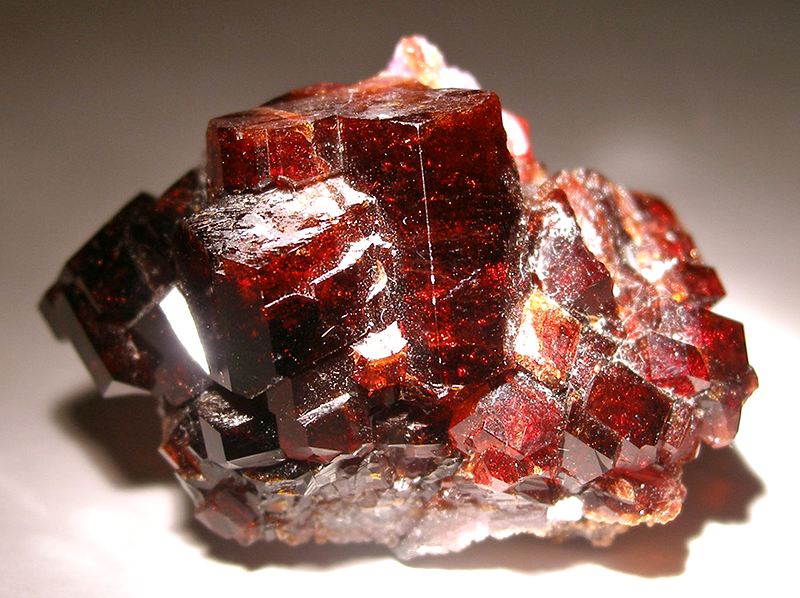
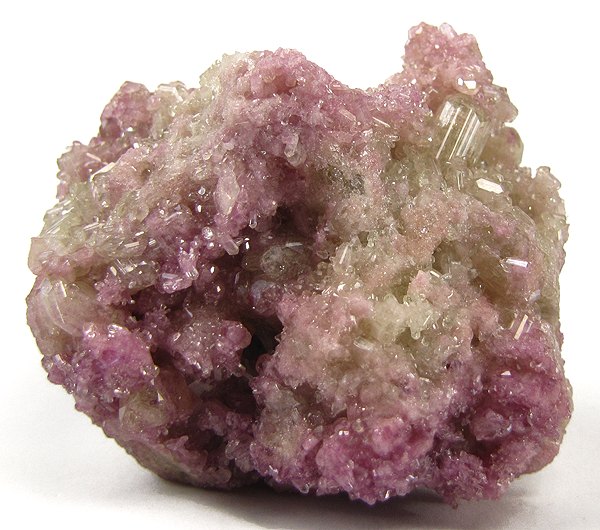
Vesuvianite is a complex calcium and aluminum silicate that forms tetragonal crystals with colors ranging from green to brown, first discovered on the slopes of Mount Vesuvius. Prized by collectors for its rarity and beauty, it reaches a hardness of 6.5 on the Mohs scale.
Vesuvianite, also known as iddenite when displaying intense green coloration, is a calcium-aluminum silicate that crystallizes in the tetragonal system. Discovered in 1795 on the lava flows of Mount Vesuvius, it takes its name from the Campanian volcano. Its complex chemical formula Ca₁₉Al₁₃Mg(SiO₄)₁₀(Si₂O₇)₄(OH)₁₀ reflects a sophisticated crystal structure where calcium, aluminum, and magnesium ions alternate within a framework of silicate tetrahedra. Crystals range from transparent to translucent, with colorations spanning emerald green (most sought-after variety), yellow, brown, and red. In the gemological market, gem-quality specimens are relatively rare: the finest examples come from the Asturias Province in Spain, Mexico, and minor deposits in Japan and Switzerland. The moderate hardness (6.5 Mohs) makes it suitable for pendants and bracelets, but less ideal for rings.
Vesuvianite: Ca₁₉Al₁₃Mg(SiO₄)₁₀(Si₂O₇)₄(OH)₁₀. Crystal system: tetragonal (space group P4/nnc). Hardness: 6.5 Mohs; relative density: 3.35–3.45 g/cm³. Refractive index: nω = 1.703–1.709; nε = 1.700–1.707 (negative birefringence, uniaxial). Chromatic dispersion: moderate (0.020). Pleochroism: present, particularly evident in green varieties. UV spectroscopy: weak to moderate fluorescence (yellow-green under long-wave UV). Conchoidal fracture; cleavage absent. Genesis: contact metamorphic and metasomatic mineral, frequent in calcareous marbles and calcic skarns associated with granites. Typical mineralogical associations: grossular, wollastonite, diopside, magnetite, sphene. The iddenite variety (intense green) is the most sought after; californite (opaque green resembling jade) has historically been confused with Californian jade. Treatments: rarely heat-treated; thermal stability is good up to ~500 °C.
Mining localities
- Monte Vesuvio, Campania, Italia (località tipo)
- Provincia di Asturie, Spagna (qualità gemma)
- Sonora, Messico (cristalli di qualità)
- Giappone (giacimenti minori)
- Svizzera — Valle di Binn (cristalli ben formati)
Frequently Asked Questions
What is the hardness of vesuvianite and how do you identify it?
Vesuvianite has a hardness of 6.5 on the Mohs scale, making it fairly resistant to everyday scratching but not suitable for jewelry subject to heavy wear. It is identified by its characteristic tetragonal crystals and colors ranging from green to brown, often with distinctive blended colorations.
Where is vesuvianite found and what is its origin?
Vesuvianite was first discovered on the slopes of Mount Vesuvius in Italy, where it forms in calcium-rich metamorphic rocks. Today it is found in other volcanic and metamorphic localities worldwide, representing a fascinating trace of high-temperature geological processes.
What is the chemical composition of vesuvianite?
Vesuvianite is a complex calcium and aluminum silicate with the formula Ca₁₉Al₁₃Mg(SiO₄)₁₀(Si₂O₇)₄(OH)₁₀, which also contains magnesium and hydroxyl groups. This structured composition gives it its characteristic tetragonal crystal form and unique physical properties.
How much does vesuvianite cost and where can you buy it?
Vesuvianite prices range from 20 to 200 euros per carat depending on quality, color purity, and origin, with rare samples from Vesuvius reaching higher prices. It can be purchased from specialized mineralogists, mineral fairs, and online platforms for collectors, always verifying authenticity certificates.
Entry generated with Claude API (Anthropic) on data extracted from Mindat, RRUFF and Wikipedia. Not yet reviewed by a human expert. Verify data against original sources before citing in formal work.