Cordierite
Cordierite
Mg₂Al₄Si₅O₁₈ Properties
- Category
- Gem
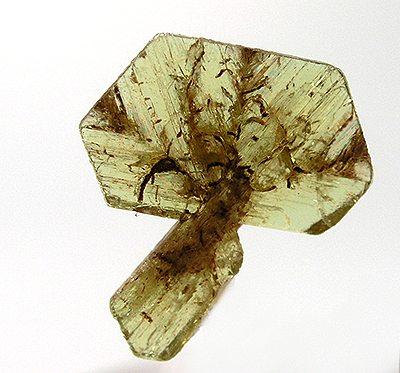
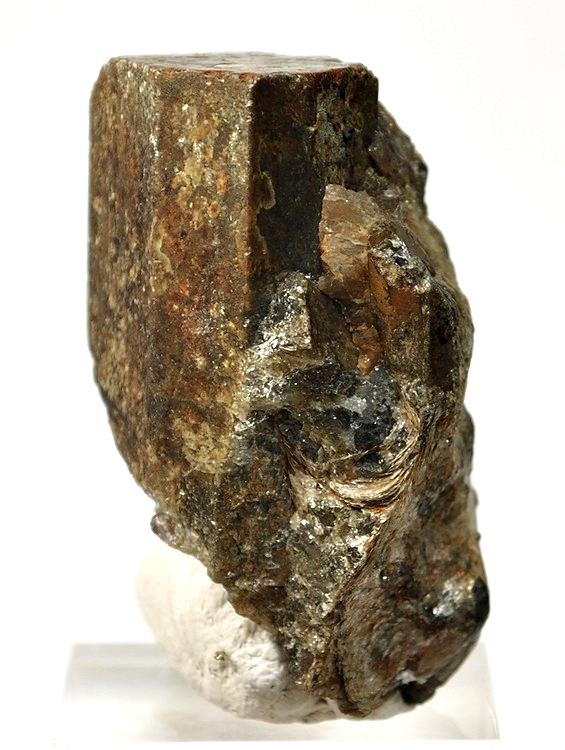
Cordierite is a magnesium and aluminum silicate that forms orthorhombic crystals, valued as a gemstone for its fascinating pleochroism (changes color from blue to yellow to colorless depending on the viewing angle). With a hardness of 7-7.5 on the Mohs scale, it is sufficiently resistant for jewelry, although less hard than sapphire.
Cordierite (Mg₂Al₄Si₅O₁₈) is a cyclosilicate that crystallizes in the orthorhombic crystal system, characterized by a structure of six-membered rings of silicon tetrahedra. It is named after French mineralogist Pierre Louis Antoine Cordier, who first described it in the early nineteenth century. Its primary gemological appeal resides in its intense triaxial pleochroism: observing the crystal along different axes reveals shades of violet-blue, golden yellow, and colorless. This optical phenomenon is due to color centers linked to iron impurities and possibly to lattice defects.
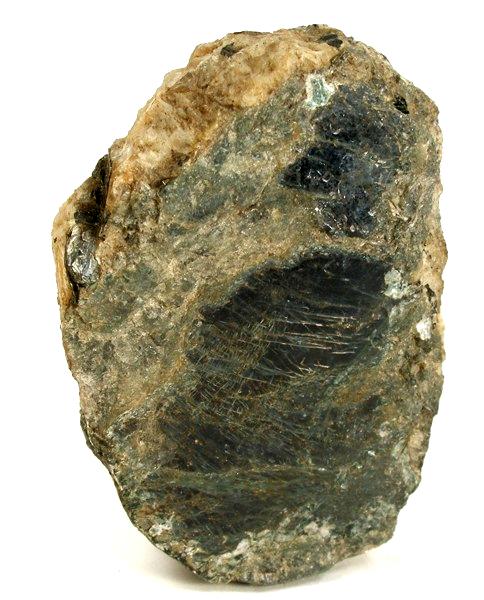
Cordierite forms predominantly in medium- to high-grade metamorphic rocks, particularly in gneisses, mica schists, and cornubianites, where it represents a mineralogical indicator of specific pressure and temperature conditions. The finest gem-quality varieties come from Sri Lanka (Ceylon), Madagascar, Myanmar, and Brazil, where crystals of sufficient quality for cutting are found. On the gemological market, cordierite is less well-known than sapphire but is appreciated by collectors for its rarity and characteristic play of colors. Its hardness of 7-7.5 Mohs makes it suitable for pendants and earrings, but less ideal for rings due to relative brittleness.
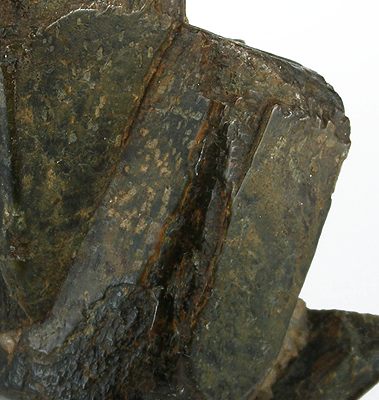
Cordierite: Mg₂Al₄Si₅O₁₈. Orthorhombic crystal system, space group Cccm, lattice parameters a ≈ 17.3 Å, b ≈ 9.8 Å, c ≈ 9.4 Å. Mohs hardness 7-7.5; density 2.60-2.66 g/cm³. Biaxial negative refractive index: nα ≈ 1.540, nβ ≈ 1.548, nγ ≈ 1.553 (variable with composition and degree of alteration); birefringence Δn ≈ 0.013. Marked triaxial pleochroism: X = colorless/pale yellow, Y = blue/violet-blue, Z = yellow/yellow-brown. Absorption spectroscopy: characteristic bands at 645 nm and 550 nm due to Fe²⁺ in octahedral sites. Weak UV fluorescence, generally inert. Conchoidal fracture, imperfect cleavage along (010). Cordierite is frequently altered to pinite (an aggregate of mica and feldspar) along fractures and crystal edges; such alteration is diagnostic and known as cordieritized. Typical mineral associations: feldspars (plagioclase, orthoclase), quartz, biotite, sillimanite, garnet. The iolite variety (intense pleochroism, high transparency) is the preferred form for jewelry. Gemological analysis: cordierite is distinguished from sapphire and tanzanite by its lower refractive index, lower birefringence, and characteristic pleochroic pattern.
Mining localities
- Bodenmais, Baviera, Germania
- Orijärvi, Finlandia
- Colonna, Corsica, Francia
- Ratnapura, Sri Lanka
- Madagascar
- Mogok, Myanmar
- Minas Gerais, Brasile
- Yogo Sapphire District, Montana, USA
Frequently Asked Questions
What is cordierite pleochroism and how can you observe it?
Pleochroism is the optical property where cordierite changes color when viewed from different angles: from deep blue to pale yellow to nearly colorless. This phenomenon occurs because the orthorhombic crystal structure absorbs light differently along the three crystallographic axes, making it the mineral's most distinctive feature. To fully appreciate pleochroism, you need to rotate the stone under various light sources.
How much does good quality cordierite cost and where is it found?
Good quality gemstone cordierite typically costs between 20 and 100 euros per carat, depending on transparency, color saturation, and inclusions. Major deposits are found in Sri Lanka, Madagascar, Myanmar, and India, while lower-quality specimens also come from Brazil and Tanzania. The lowest prices are for opaque or highly included stones, while transparent pieces with saturated blue color command the highest values.
How can you identify cordierite from other similar blue stones?
Cordierite is primarily distinguished by its characteristic pleochroism, absent in most other blue gemstones, and by a hardness of 7-7.5 on the Mohs scale, intermediate between sapphire (9) and tanzanite (6-6.5). Additionally, cordierite has a specific gravity of approximately 2.6-2.7 g/cm³ and shows a distinctive refractive index (1.54-1.55) measurable with a gemological refractometer. A reliable test is to observe the stone from different angles to verify the characteristic color shift from blue to yellow.
What is cordierite's chemical composition and how is it formed?
Cordierite has the chemical formula Mg₂Al₄Si₅O₁₈ and is a cyclosilicate, meaning it contains rings of silicates in its orthorhombic crystal structure. It forms in high-grade metamorphic rocks, primarily in gneisses and schists, when magnesium and aluminum-rich sediments are subjected to elevated pressure and temperature in the deep crust. Traces of iron impurities provide the characteristic colors ranging from blue to green to yellow.
Entry generated with Claude API (Anthropic) on data extracted from Mindat, RRUFF and Wikipedia. Not yet reviewed by a human expert. Verify data against original sources before citing in formal work.