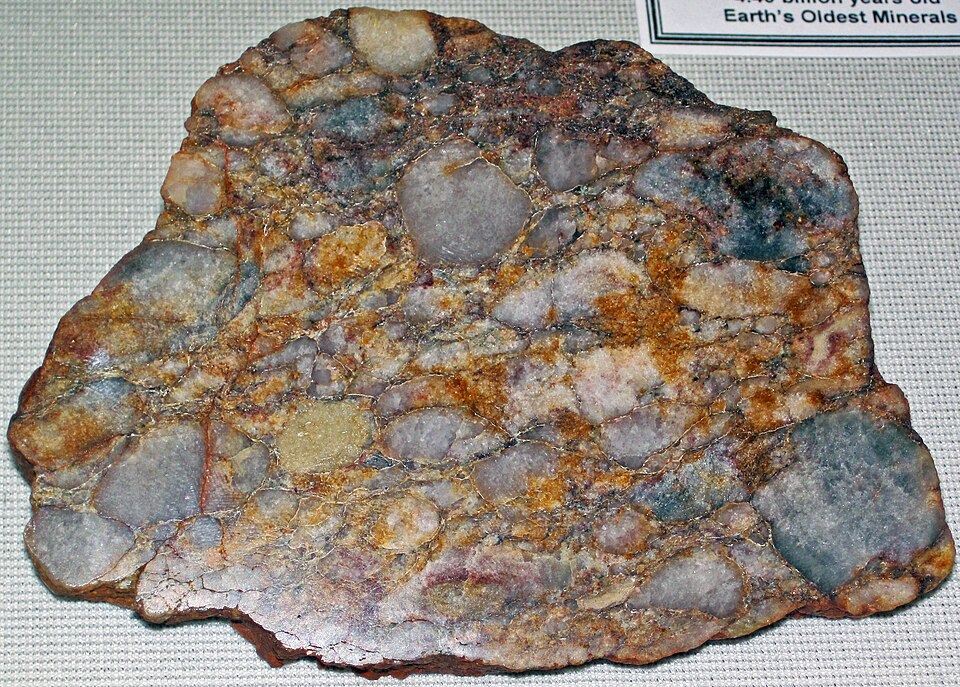
Quartzite
Quarzite
SiO₂ Properties
- Category
- Rock
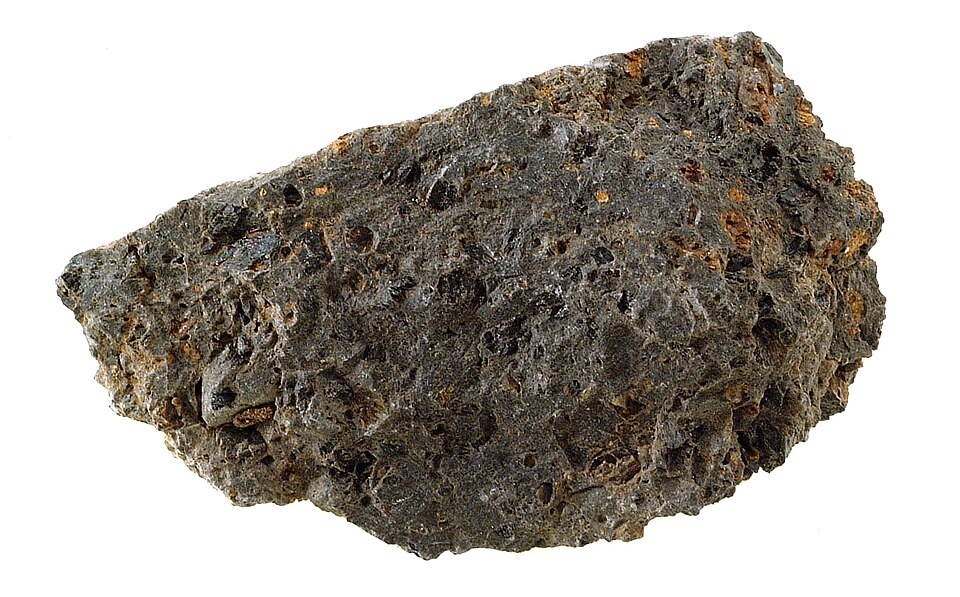
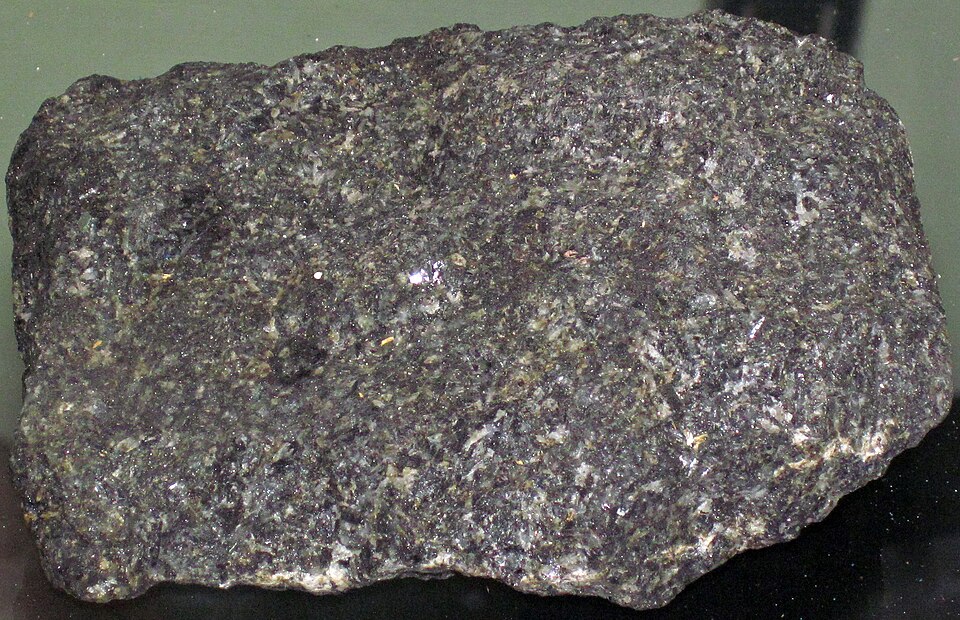
Quartzite is a metamorphic rock composed almost entirely of quartz (SiO₂), formed by the heating and pressure of siliceous sandstones at crustal depths. It is extremely hard and resistant, with a hardness of 7 on the Mohs scale, and is distinguished from quartz by its massive and compact structure rather than a crystalline one.
Quartzite represents one of the most common and stable metamorphic products of the Earth's crust. It forms when quartz-rich sandstones (siliceous sediments deposited in marine or fluvial environments) undergo regional or contact metamorphism, typically at temperatures between 200 and 800 °C and variable pressures. During this process, original quartz grains are welded together through recrystallization, eliminating interstitial pores and creating an incredibly compact and monolithic rock. Unlike sandstone, which disintegrates easily under pressure, quartzite is practically insoluble to ordinary chemical agents and resists mechanical erosion magnificently.
The crystal structure remains trigonal (as in pure quartz), but individual crystals are so intimately connected that the rock behaves as a homogeneous body. Coloration varies from pure white to gray, pink, red (from iron oxides), yellow, or even blue, depending on impurities present during metamorphosis. Quartzite deposits are found in ancient mountain ranges and continental shields, often in association with schists, marbles, and gneisses. Quartzite has historically been used for paving, monumental sculptures, and construction material of the highest quality, owing to its nearly legendary durability.
Quartzite is a medium- to high-grade metamorphic rock characterized by an equigranular granoblastic texture with quartz grains typically ranging from 0.1 to 2 mm. Mineralogical composition is dominated by SiO₂ (>90%), with possible accessory minerals including feldspar, mica, magnetite, ilmenite, and rutile. The crystal system is trigonal (space group P3₁21 or P3₂21 for α-quartz). Hardness is 7 on the Mohs scale; density ranges from 2.65 to 2.75 g/cm³ depending on the degree of compaction and the presence of accessory minerals. The refractive index is approximately 1.544 (ω) and 1.553 (ε), with positive birefringence of ~0.009. Quartzite is practically opaque in thick samples and may show translucency in thin sections. Fracture is conchoidal or irregular; the rock exhibits no well-defined cleavage due to strong intergranular cementation. Under an optical microscope in transmitted light, grain boundaries are sharp and often characterized by sutures (sinuous contact lines) resulting from metamorphic recrystallization. Raman spectroscopy of quartz shows the characteristic band at ~465 cm⁻¹. The α-β quartz transition temperature (573 °C) provides information on metamorphic grade. Geothermometric analysis based on fluid inclusions and mineral associations allows estimation of the P-T conditions of formation.
Mining localities
- Quarzifera della Val d'Aosta, Italia
- Massiccio dell'Aar, Svizzera
- Monti Appalachi, Stati Uniti
- Catena del Capo, Sudafrica
- Scudo Canadese, Canada
- Catena dell'Himalaya, India
- Massiccio del Bohemico, Repubblica Ceca
- Pirenei, Francia e Spagna
Frequently Asked Questions
How is quartzite formed and what is the difference with sandstone?
Quartzite forms when siliceous sandstone undergoes high heat and pressure during crustal metamorphosis, unlike sandstone which is a sedimentary rock. This process fuses the original quartz grains (SiO₂) into a cohesive and massive structure, eliminating pores and giving quartzite its characteristic hardness of 7 on the Mohs scale.
How do you identify true quartzite from similar rocks?
True quartzite is recognized by its extreme hardness (not easily scratched with a knife), by the concoidal fracture when broken, and by its composition almost entirely of visible quartz crystals firmly welded together. Unlike sandstone, quartzite does not produce quartz powder when rubbed, as the grains are fused together rather than loose.
What are the main uses of quartzite and where is it extracted?
Quartzite is mainly used as a building material (tiles, cladding), in outdoor flooring due to its wear resistance, and as an aggregate for high-performance cements. The main global deposits are found in Brazil, South Africa, India and Australia, with Italy possessing significant resources in Tuscany and Liguria.
Is quartzite harder than quartz and what are its physical properties?
Quartzite has a hardness of 7 on the Mohs scale, identical to crystalline quartz, but is structurally much more resistant because the grains are fused together rather than loose, giving it superior toughness. It has a density of 2.65-2.75 g/cm³, is impermeable, chemically inert and weather-resistant, making it ideal for external applications.
Entry generated with Claude API (Anthropic) on data extracted from Mindat, RRUFF and Wikipedia. Not yet reviewed by a human expert. Verify data against original sources before citing in formal work.