Vanadinite
Vanadinite
Pb₅(VO₄)₃Cl Properties
- Category
- Mineral
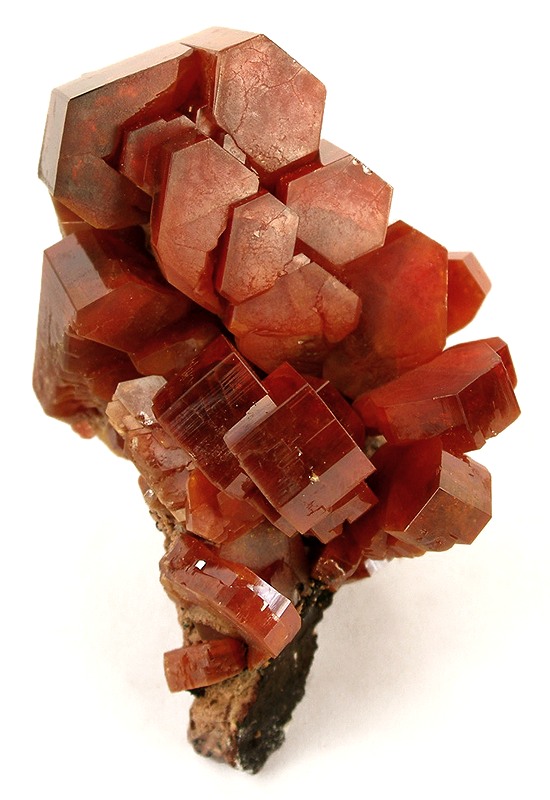
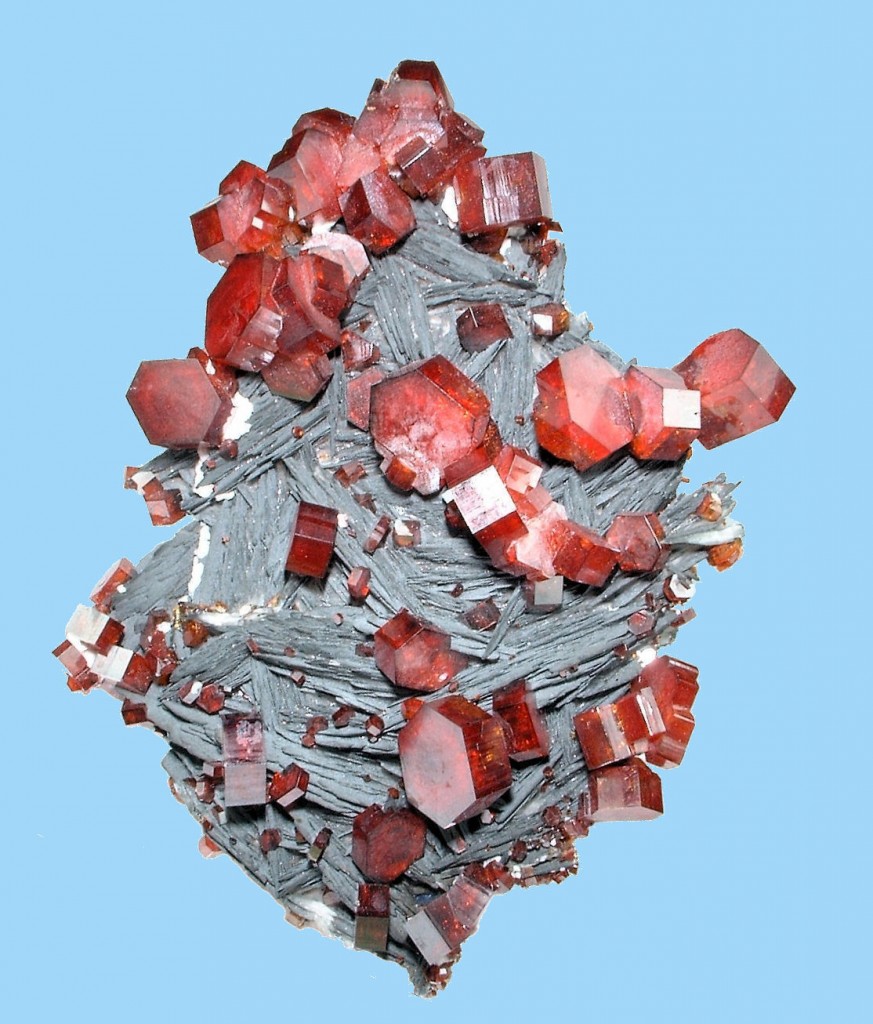
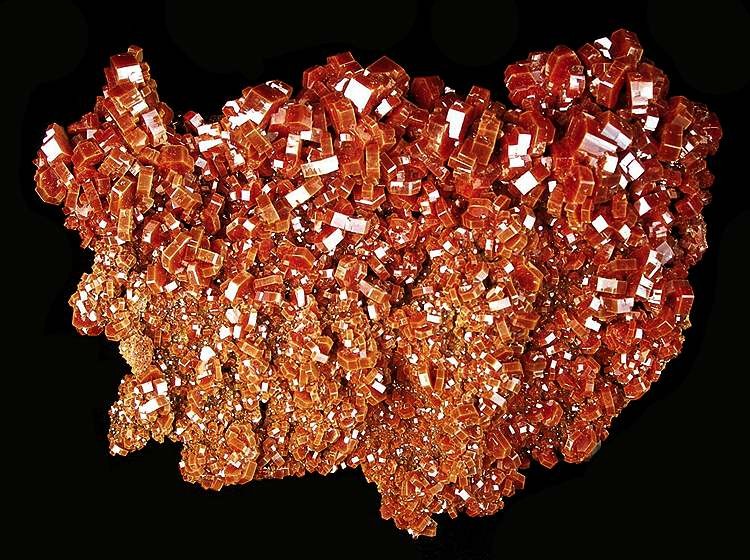
Vanadinite is a lead vanadate with chlorine that crystallizes in hexagonal form, characterized by prismatic crystals that are red, orange, or brown. It is a highly sought secondary oxidation mineral among collectors for the beauty of its crystals, despite its low hardness (2.5-3 Mohs) making it fragile.
Vanadinite is a chlorinated lead vanadate that represents one of the most important vanadium minerals in nature. It belongs to the apatite group and crystallizes in the hexagonal system, forming characteristic prismatic crystals that can reach significant dimensions. Its coloration ranges from brilliant red to intense orange to brown, depending on impurity content and the oxidation state of vanadium. The mineral forms in secondary oxidation environments in the surface zones of lead and vanadium deposits, often associated with minerals such as cerussite, anglesite, wulfenite, and other secondary oxides and salts.
From a collector's perspective, vanadinite is highly prized for its vivid color and crystalline clarity. The most renowned deposits are found in Morocco (Mibladen, Touissit), southwestern United States (Arizona, New Mexico), Namibia, and Peru. Moroccan crystals are particularly sought after for their pure red color and well-developed forms. Despite its low hardness making it unsuitable for gemological use, it remains a fundamental specimen in quality mineralogical collections.
Composition: Pb₅(VO₄)₃Cl with possible substitutions of As for V and F for Cl. Crystal system: hexagonal, space group P63/m, cell parameters a = 10.35 Å, c = 6.88 Å. Mohs hardness: 2.5-3. Density: 6.8-7.2 g/cm³. Cleavage: none, conchoidal fracture. Luster: adamantine, transparency from transparent to translucent. Refractive index: nω = 2.350, nε = 2.416 (positive birefringent). Color: red, orange, brown; yellow streak. Pleochroism: weak to moderate. UV Fluorescence: yellow-green fluorescence under long-wave UV rays. Solubility: slightly soluble in dilute acids. Mineral associations: cerussite, anglesite, wulfenite, limonite, goethite. Genesis: secondary oxidation mineral in surface zones of lead and vanadium deposits, typical of arid climates. Diagnostic characteristics: red-orange color, hexagonal prismatic crystal habit, high density, acid solubility.
Mining localities
- Mibladen, Marocco
- Touissit, Marocco
- Arizonа, Stati Uniti
- Nuovo Messico, Stati Uniti
- Namibia
- Perù
- Messico
- Spagna (Almería)
Frequently Asked Questions
How do you identify vanadinite and what are its main characteristics?
Vanadinite is easily recognized by its prismatic crystals in shades of red, orange, or brown, crystallizing in the hexagonal system. It has a chemical formula Pb₅(VO₄)₃Cl and is highly sought after by collectors for the beauty of its crystals, despite its relatively low hardness (3-3.5 on the Mohs scale). It has a resinous luster and is transparent, with high specific gravity due to its lead content.
Where is vanadinite found in the world and how does it form?
Vanadinite is a secondary oxidation mineral that forms in the alteration zones of lead and vanadium deposits through oxidation of primary minerals in the presence of vanadium and chlorine-rich solutions. Major deposits are found in Morocco (especially the Mibladen region), Mexico, the United States (Arizona, New Mexico), Russia, and Peru. It typically forms at low temperatures in the oxidation zones of metallic ore deposits.
What is the price of vanadinite and how much is it worth on the collector's market?
The price of vanadinite varies considerably based on quality, size, and crystal beauty, with common specimens starting from 10-20 euros for small samples up to hundreds of euros for exceptional and well-formed crystals. High-quality specimens from Morocco or Mexico with well-defined crystals and vivid coloration can reach 500-2000 euros. Value increases significantly for historical collections or specimens with particularly interesting optical properties.
Is vanadinite toxic and what precautions should be taken when handling it?
Vanadinite contains lead and vanadium, elements that are potentially toxic if ingested, so it should not be put in the mouth or in contact with open wounds. It presents no significant risks during simple observation and collecting, but it is advisable to wash your hands after contact with the mineral, especially if working with vanadinite dust. It should not be used for decorative purposes in areas where children or pets could ingest fragments.
Entry generated with Claude API (Anthropic) on data extracted from Mindat, RRUFF and Wikipedia. Not yet reviewed by a human expert. Verify data against original sources before citing in formal work.