Granite
Granito
SiO₂ + Al₂O₃ + K₂O Properties
- Category
- Rock
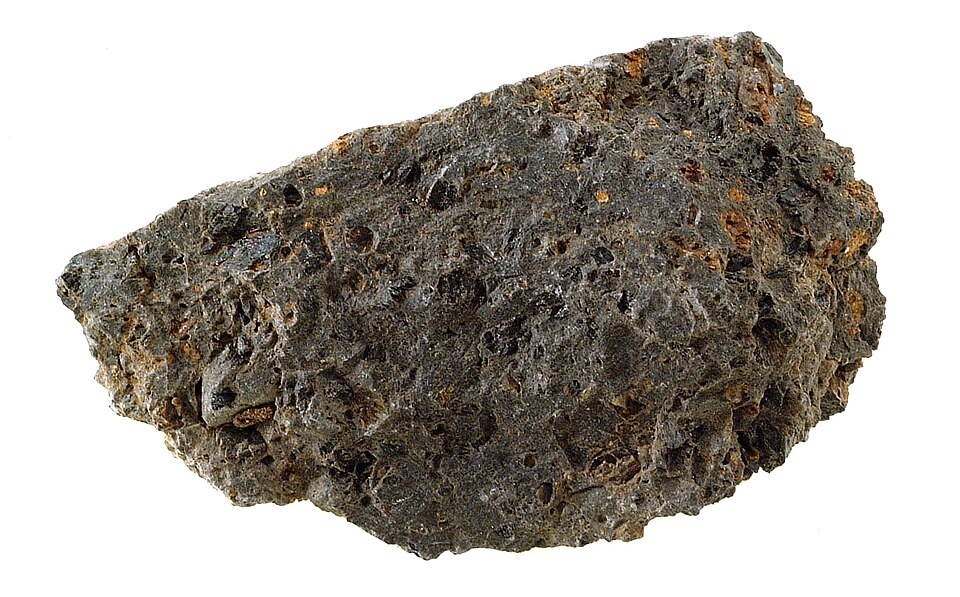
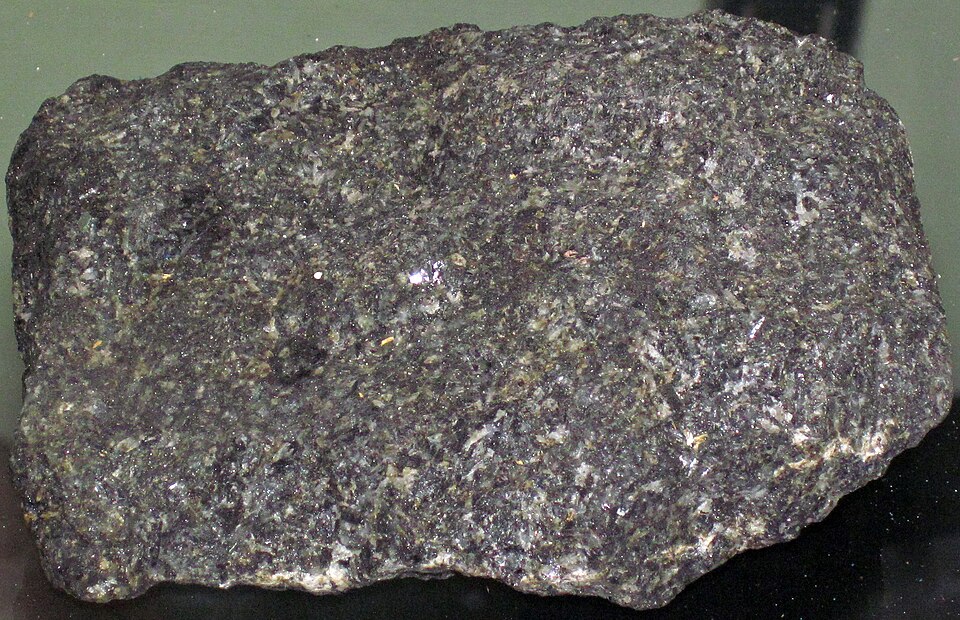
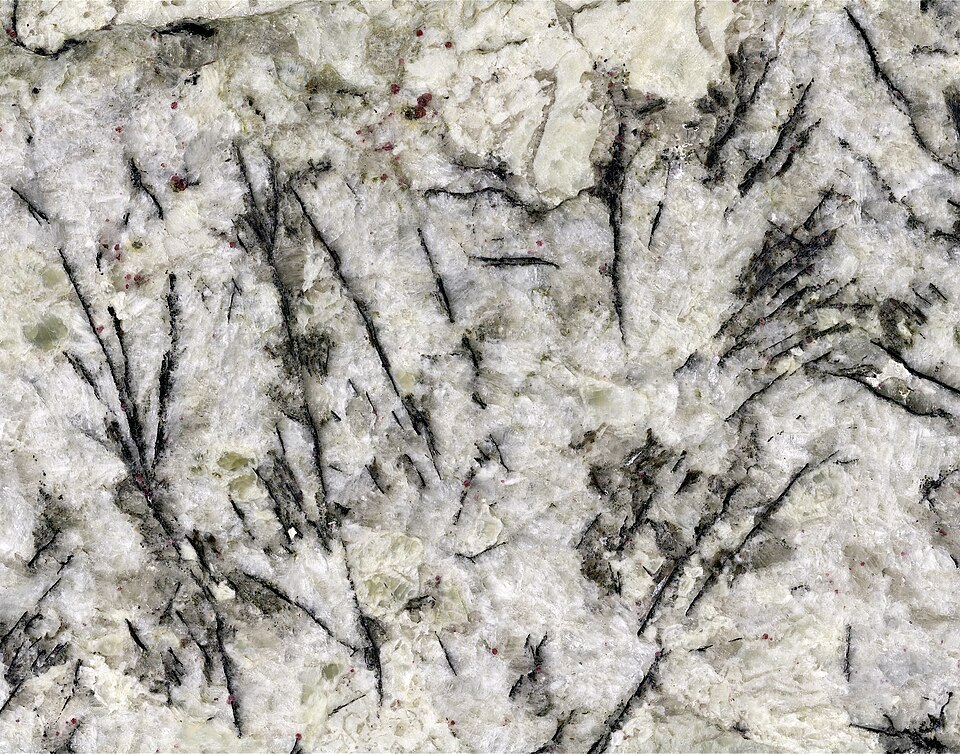
Granite is an intrusive igneous rock composed of visible crystals of quartz, feldspar, and mica, formed by the slow cooling of magma at depth. It is one of the most abundant rocks in the Earth's crust and one of the most widely used materials in construction and sculpture.
Granite represents one of the most characteristic products of fractional crystallization of granitic magma. Its average composition includes quartz (20–30%), alkali feldspar (30–40%), sodic plagioclase (20–30%), and mica (5–15%), with accessories such as magnetite, apatite, and zircon. The phaneritic texture — with crystals distinguishable to the naked eye — reflects slow cooling that occurred at depths of 3–10 km, where temperatures were maintained between 700 and 900 °C for thousands of years.
Geologically, granite forms in specific tectonic environments: magmatic arcs, collisional continental margins, and zones of crustal extension. Large granitic bodies, called batholiths, occupy areas of thousands of square kilometers and represent the cores of mountain ranges. The spheroidal weathering of granite, due to exfoliation along natural fractures, produces the characteristic rounded forms visible in outcrops such as Yosemite or Sardinia. From an applied perspective, granite is valued for its mechanical strength, low porosity, and multi-century durability: from medieval cathedrals to modern monuments, it remains the noblest stone material for pavements, cladding, and sculpture.
Granite is an intrusive (plutonic) igneous rock with composition SiO₂ (60–75% by weight) + Al₂O₃ (12–16%) + K₂O + Na₂O (6–8%). Density ranges from 2.65 to 2.75 g/cm³. Mohs hardness 6–7 (controlled by quartz and feldspar; mica is softer at 2.5–3). Seismic velocity is approximately 6.0–6.5 km/s (P-waves).
Crystal structure: alkali feldspar (orthoclase/microcline, monoclinic system) forms tabular crystals; plagioclase (oligoclase-andesine, triclinic) is more tabular; quartz (trigonal) occupies interstitial spaces; mica (triclinic biotite or monoclinic muscovite) forms lamellae. The equigranular granular texture is typical, with average crystal size 2–10 mm. Variations: porphyritic granite (feldspar phenocrysts > 2 cm), two-mica granite (biotite + muscovite).
Geochemistry: K/Na ratio varies; trace elements include Rb, Ba, Pb, Zr. Color index (CI) 5–15. Alkalinity index (A/CNK) > 1.0 (peraluminous). Isotopes: ⁸⁷Sr/⁸⁶Sr and ¹⁴³Nd/¹⁴⁴Nd ratios indicate crustal contamination. Radiometric dating: K/Ar, Rb/Sr, U/Pb on zircon provide crystallization ages (often Precambrian–Paleozoic).
Alteration: feldspar → kaolinite; biotite → chlorite; plagioclase → sericite. Primary porosity < 1%, permeability controlled by fractures. Compressive strength 100–300 MPa.
Mining localities
- Baviera, Germania
- Bretagna, Francia
- Sardegna, Italia
- Svezia, Scandinavia
- Yosemite, California, USA
- Corsica, Francia
- Penisola Iberica, Spagna-Portogallo
- Massiccio del Gottardo, Svizzera
- Grecia (marmi e graniti antichi)
- Egitto (graniti rossi e neri del Nilo)
Frequently Asked Questions
How is granite formed and how long does it take?
Granite forms from the slow cooling of magma deep within the Earth's crust, a process that takes tens of thousands of years and allows crystals of quartz (SiO₂), feldspar (K₂O·Al₂O₃·6SiO₂), and mica to grow to visible sizes. This gradual cooling, unlike volcanic rocks, gives granite its characteristic crystalline structure and mechanical strength.
How do you recognize granite from its visible crystals?
Granite is easily recognized by its granular appearance with crystals clearly visible to the naked eye: transparent-whitish quartz, pink or white feldspar, and black or silvery mica distinctly visible on the surface. This mixed mineral composition and the absence of layered structures clearly differentiate it from other igneous rocks like basalt (microscopic crystals) or marble (carbonate crystals).
What are the best uses of granite in construction and why?
Granite is ideal for flooring, cladding, countertops, and facades because it possesses high hardness, resistance to abrasion and weathering, and good density that makes it stable over time. Its aesthetic beauty, combined with physical properties due to its quartz and feldspar composition, makes it the preferred material for high-traffic areas and outdoor use.
Where is granite found in nature and what are the main deposits?
Granite is abundant on many continents, with major deposits in Brazil, India, Portugal, China, Scandinavia, and the Mediterranean, where outcrops of intrusive rock have been exposed by geological erosion. These deposits represent 1-2% of the Earth's crust, which is why granite remains one of the most available rocks for commercial extraction and use in construction.
Entry generated with Claude API (Anthropic) on data extracted from Mindat, RRUFF and Wikipedia. Not yet reviewed by a human expert. Verify data against original sources before citing in formal work.